
The Rhythm of life
Here, I drink guava juice.
This is not, in itself, a profound observation. Guava juice is readily available in England and I could presumably buy it whenever I wanted, although at home I am more likely to begin the morning with coffee and a vague sense that I am already running late.
Here, the guava juice has become part of the routine. It belongs with the early starts, the cold mornings, breakfast eaten with other people and the process of gathering whatever we need before heading out for the day. It is a small detail, but one that already feels inseparable from being in Zambia.

My life in England has its own familiar rhythm.
I wake up, get ready for work and travel to Guildford, where my days are governed by calendars, agendas and the reassuringly specific language of local government. There are reports to read, meetings to arrange, members to advise and decisions that must be recorded accurately enough to withstand the possibility that somebody will become extremely interested in the wording several months later.
Much of my work involves creating the conditions in which other people can make decisions. I make sure the papers are available, the correct procedure is followed and the resulting minutes explain, with calm institutional dignity, what may in reality have been a lengthy and occasionally bewildering discussion.
Then I come home.

Evenings in England tend to contain the remnants of several different lives. There may be work still occupying part of my mind, university reading I should be doing, charity administration waiting for attention or a website idea I have somehow turned into another substantial undertaking. I light a candle, select the day’s aftershave with the seriousness it deserves, and begin negotiating with a to-do list that has long since abandoned any pretence of being achievable.
I am nearly always connected to something.
An email arrives, a message needs answering or a document requires editing, while somewhere ahead there is another meeting approaching, another deadline in the distance and another obligation that once seemed like a perfectly manageable idea.
None of this makes my life in England unhappy. I care about the work, the organisations and the people involved. I have chosen most of these commitments because they matter to me, although I have occasionally chosen so many things that their combined significance becomes difficult to distinguish from administrative congestion.
Zambia has not removed responsibility from my days. In some respects, the routine here is more structured.
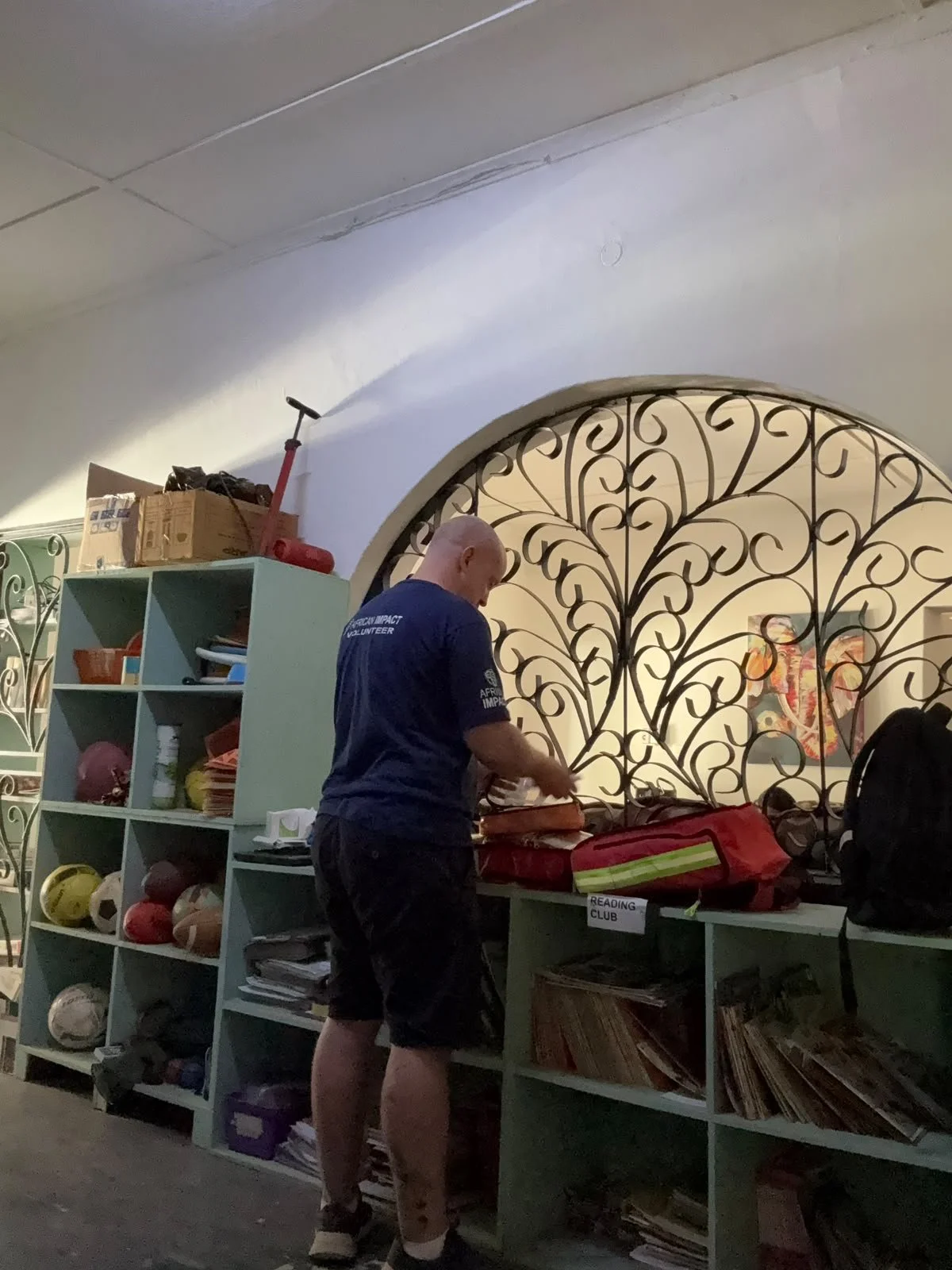
We start early. There are tasks to complete, materials to prepare and people depending upon the programme happening as planned. Medical kits need checking, sandwiches need making and activities need organising. If we are visiting a community, the equipment must be carried with us, usually in a backpack that becomes heavier with every step and appears to have been designed by somebody with a personal grievance against the human spine.
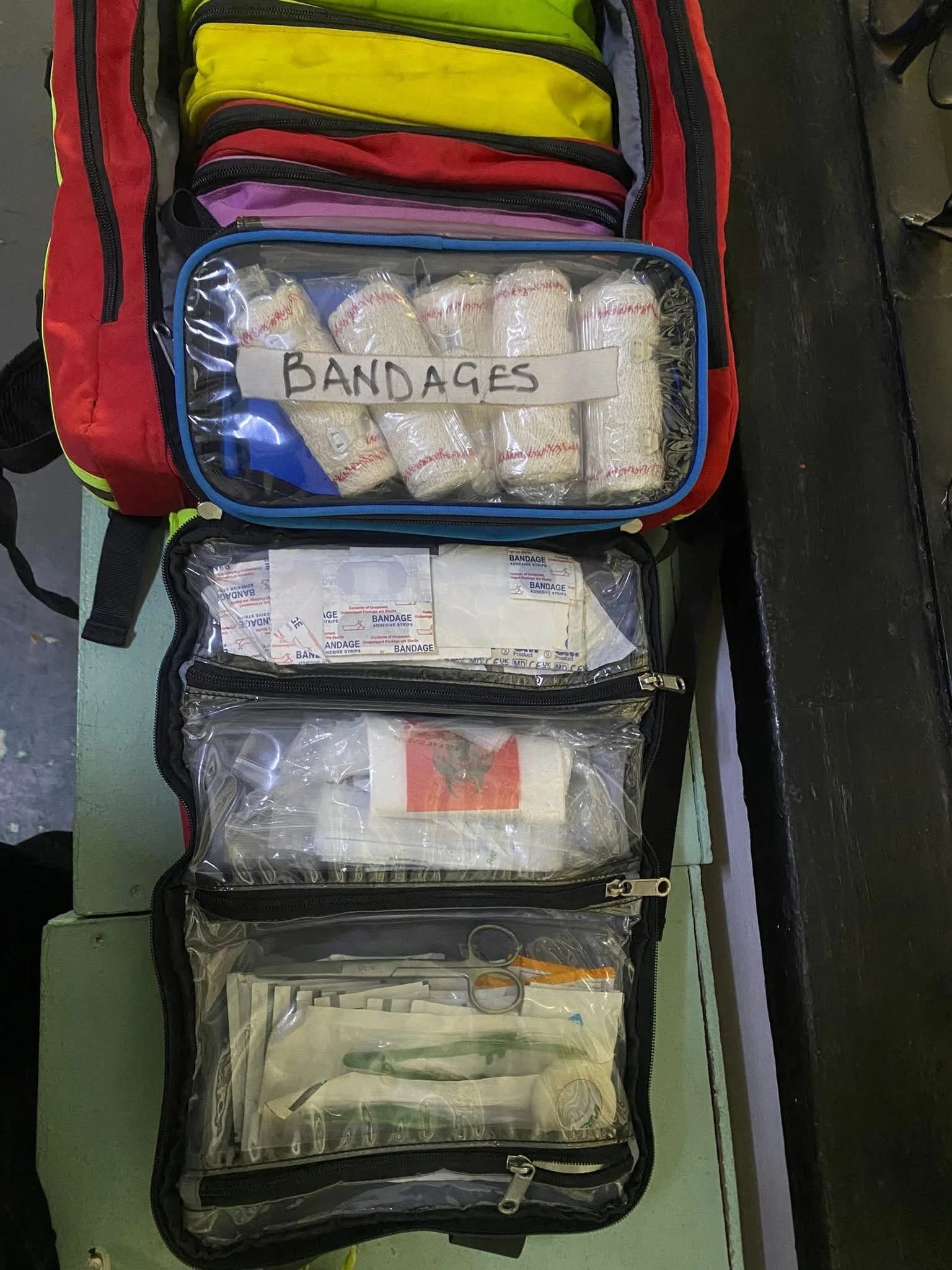
The difference is that the work here feels contained within the day.
There is a job in front of me, and I do it. Once the kits are prepared, the sandwiches made and the clinic session or home-based care visits completed, the work has a visible shape.
My work in England rarely offers that kind of conclusion. Governance is important precisely because it continues. There will always be another agenda, another meeting cycle and another version of the document containing three comments that contradict one another.
Here, usefulness often feels more immediate.
That does not make it more important. A well-run meeting can affect public services, individual livelihoods and entire communities, even if the work involved happens largely through emails and carefully numbered paragraphs. The difference is not one of value, but of distance.
In Zambia, I can see the sandwich being handed over.
I can watch the blood pressure machine produce a reading.
I can sit beside a child as an unfamiliar word becomes familiar.
The connection between the task and its purpose is shorter.
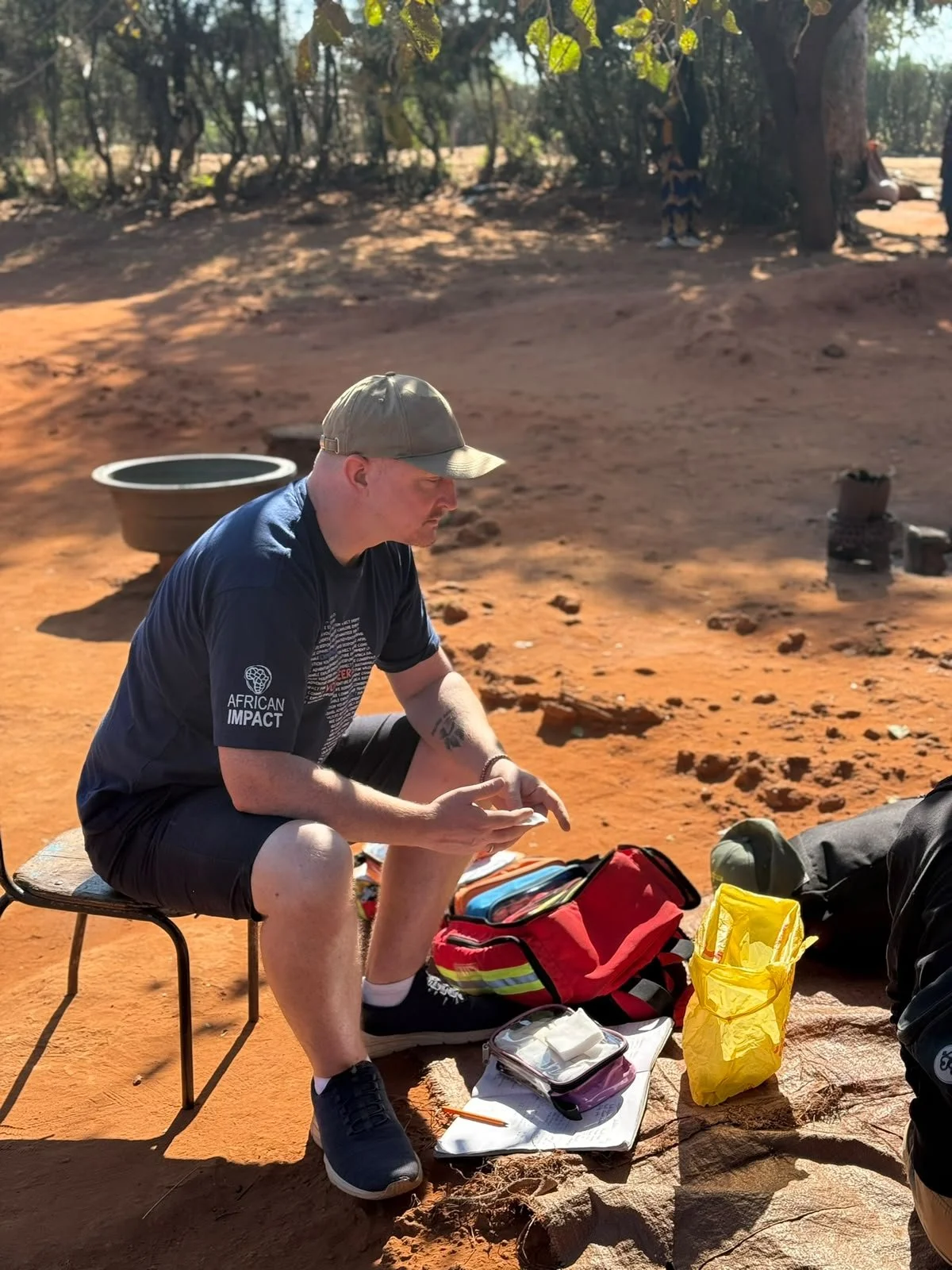
There are differences outside the work too. At home, meals are usually fitted around everything else. Here, eating is more communal. People stop, sit together and share the same pause in the day. Conversation continues around the food, without everybody simultaneously disappearing into separate rooms and separate obligations.
The evenings are quieter.
There is time to think, although my mind remains perfectly capable of turning reflection into an elaborate internal committee meeting. Without the usual stack of documents, domestic routines and overlapping responsibilities, thoughts have more space in which to unfold.
I have found myself considering what parts of my life are genuinely necessary and which parts have simply accumulated.
Perhaps that is the real contrast.
In England, my days are filled with things I have chosen because I want to contribute. Here, contribution has temporarily become simpler. I do not need to chair anything, develop a strategy or turn an idea into a new organisation. I need to arrive, listen and complete the task in front of me.
There is relief in that simplicity.
I know I cannot remain in this version of life indefinitely. It exists because I have stepped away from home, work and ordinary responsibilities for a limited period. Zambia is not a retreat from the world, and the people living here do not experience their routines as a restorative break from mine.
Still, contrast can reveal things that familiarity conceals.
My life in England shows me how many things matter to me, but Zambia is showing me how many of them I try to carry at once. At home, I am continually trying to build, improve, organise and prepare for whatever comes next. Here, the days seem to ask something more immediate of me.
Pay attention.
Be useful.
Share the meal.
Drink the guava juice while it is cold.
Perhaps the challenge will not be choosing between these two lives. It will be learning how to take something from this rhythm home with me, preserving a little of its focus without pretending that responsibility can be reduced to a glass of fruit juice.
Although, as places to begin go, the guava juice is not bad.