
What You Made Possible
Before I left for Zambia, 59 people did something rather extraordinary. They trusted me with their money.
Some were friends, some were colleagues and some were family. Some knew me well and others barely knew me at all. Donations arrived for £10, £20, £50 and considerably more, usually accompanied by messages of encouragement and, occasionally, instructions to make sure I did something useful with it.
Between them, they gave £2,810.
From the beginning, I had promised that every penny donated would stay in Zambia. My flights, accommodation, volunteering fees, vaccinations, insurance and all the other costs involved in getting me there were mine to pay. If somebody gave £20, I wanted that £20 to be available for the communities and projects I had travelled there to support.
What I couldn't properly understand before I arrived was what £20, £100 or ultimately £2,810 could actually mean in practice. Fundraising makes money strangely abstract. You watch the total rise on a screen and feel enormously grateful, but there is still a considerable distance between a number on a webpage and the thing it will eventually make possible.
In Zambia, that distance disappeared.
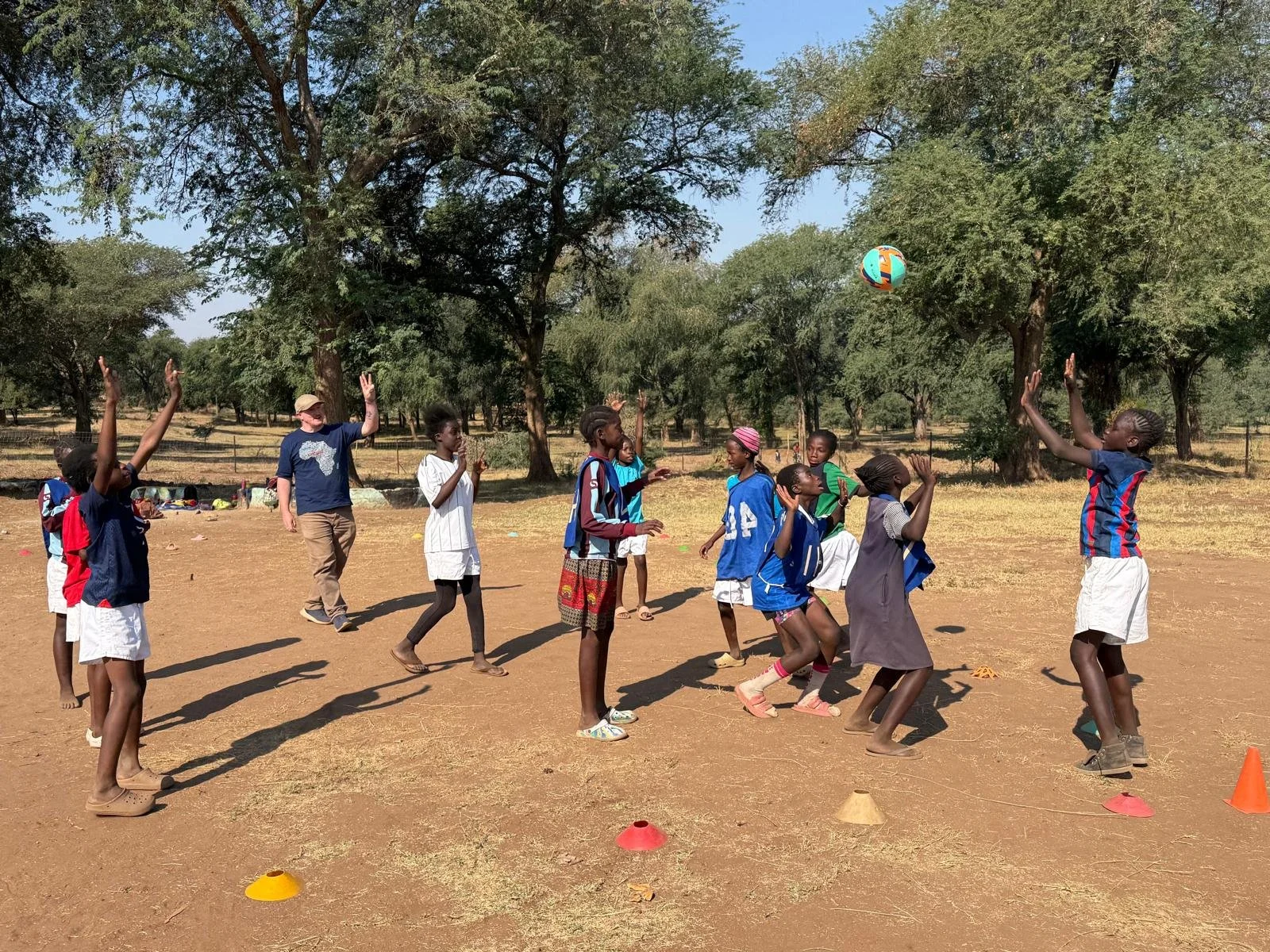
I stood inside the Youth Community Centre that your donations helped turn from an empty, unfinished building into somewhere that could actually be used. I watched paint go onto its walls, saw the beginnings of the garden that will grow food there and watched work taking place outside to create areas where children and young people could play sport.
I also met the man whose job it will be to look after the centre, knowing that your donations will pay his wages for a year. He has a wife and three children, the youngest of whom was just two weeks old when I met them, and suddenly one line in a project budget represented something much more significant. Funding a caretaker doesn't merely mean somebody will unlock the building in the morning, keep it secure and make sure things continue to work. It means a regular income for a family for the next twelve months.
That was the point at which the money became much easier to understand.
The same was true of the less conspicuous things. Donations paid for tools, seeds and manure for the garden, materials for the sports areas, fencing, electricity, water and maintenance. None of those things is particularly glamorous and few make compelling fundraising photographs, but they are precisely the things that determine whether a completed building becomes a functioning community resource or simply remains an empty building.
Elsewhere, £80.78 paid for six blood glucose monitors for the medical team. Again, they are not particularly exciting objects to look at, but they are useful ones. They can be taken into communities and used as part of health checks, helping identify people whose blood sugar levels may require further investigation.
Perhaps what matters most to me is that very little of what the donations paid for depended upon my continuing to be there.
I never wanted Positive Impact 20 to be about arriving somewhere for three weeks, doing a few nice things, taking photographs and then coming home feeling pleased with myself. The work belongs to the people who live there and to the local teams who will continue it long after my flight disappeared from the departures board.
The Youth Community Centre is a particularly good example of that. Schools will be able to use it. Girl Impact will run activities there. The Women's Group will have a safe place to meet, somewhere to store things and somewhere to continue developing the small businesses that help generate their own income. Children and young people will have space for sport and recreation, the garden will continue to develop and the caretaker will be there to look after the place as all of that happens.
I find that much more meaningful than being able to point at something and say, "I did that."
Because I didn't.
I happened to be the person who spent several months irritating everybody on the internet for money, but the generosity was yours. The planning and long-term work belong to African Impact, the African Impact Foundation, their local teams and, most importantly, the communities themselves. My role was really just to connect those two things, to ask people at home whether they would help and then, rather wonderfully, to be there when some of that help became real.
There is also a small piece of arithmetic I want to account for, because I promised from the beginning to be transparent about the money.
The final amount donated was £2,810, while the projects and equipment ultimately came to £2,877.78, including the £80.78 spent on the six blood glucose monitors. I covered the additional £67.78 myself, which means every penny donated went where it was intended to go.
My own contribution was separate. I paid for the costs of travelling to Zambia and volunteering there myself and, while I was in Livingstone, I also contributed 13,000 Kwacha, around £523 at the time, towards an operation for an eight-year-old boy with a broken collarbone. None of that came from the £2,810 people entrusted to me.
There will always be more that could be done, and I don't want to pretend otherwise. £2,810 cannot fix poverty, solve inequalities in healthcare or create opportunities for every young person. Three weeks of volunteering cannot transform a community, and I would be deeply uncomfortable pretending that either could.
But making a difference does not have to mean solving everything.
Sometimes it means helping an empty building become somewhere people can actually use. Sometimes it means giving a community group somewhere safe to meet, helping establish a garden, providing equipment for a health team or creating a job that supports a family for a year.
Individually, those things might seem small against the scale of the challenges around them. Together, they are tangible, useful and, most importantly, capable of continuing after the fundraising page has closed and the volunteer has gone home.
So I owe 59 people a very sincere thank you.
Not simply for the £2,810, although I remain slightly astonished that we raised that much, but for trusting me to do something worthwhile with it. Thank you to everyone who donated, shared the fundraiser, encouraged me, followed what was happening from home and helped turn what began as a slightly ambitious idea into something much bigger than I had expected.
When I started fundraising, all I could show you was a number on a screen and a promise that I would try to make it count.
Now I can show you where it went.
And, more importantly, what you made possible.
Where your money went
-
Your donations helped pay for the materials and practical work needed to bring the centre into use, including paint and decorating equipment, development of the garden and sports areas, fencing, utilities and maintenance.
-
Funding was allocated to employ the centre's caretaker for a year, providing both ongoing care for the building and a regular income for his family.
-
Garden tools, seeds and manure will help establish a productive garden at the centre, creating something that can continue providing value rather than disappearing when the initial funding does.
-
Funding supported the development of areas for football, netball and basketball, giving children and young people space to play and participate in activities.
-
Six blood glucose monitors, costing £80.78 in total, were purchased to support community health work.
-
Electricity. Water. Maintenance. Fencing.
Not glamorous, perhaps, but essential if a building is going to become a sustainable community resource.